I gave myself six hours to test a keyword. Somehow, I ended up shipping a website. The good news: it works. The better news: I resisted adding accounts, subscriptions, points, a community, and an ambitious AI universe.
01. Start with a human sentence, then write code
This project did not begin with “I am going to disrupt the translation industry.” It began with one wonderfully ordinary search phrase: ai image translator.
Those four words already describe the job: I have an image I cannot understand; please translate the text inside it. The user is not waiting for a brand story or a product keynote. They may simply be standing outside a restaurant, quietly negotiating with a menu.
My three-question test: Are people searching for it? Is the intent clear? Can a small product finish the job? Three yeses meant it was time to build.
02. MVP means removing a few wishes from the cart
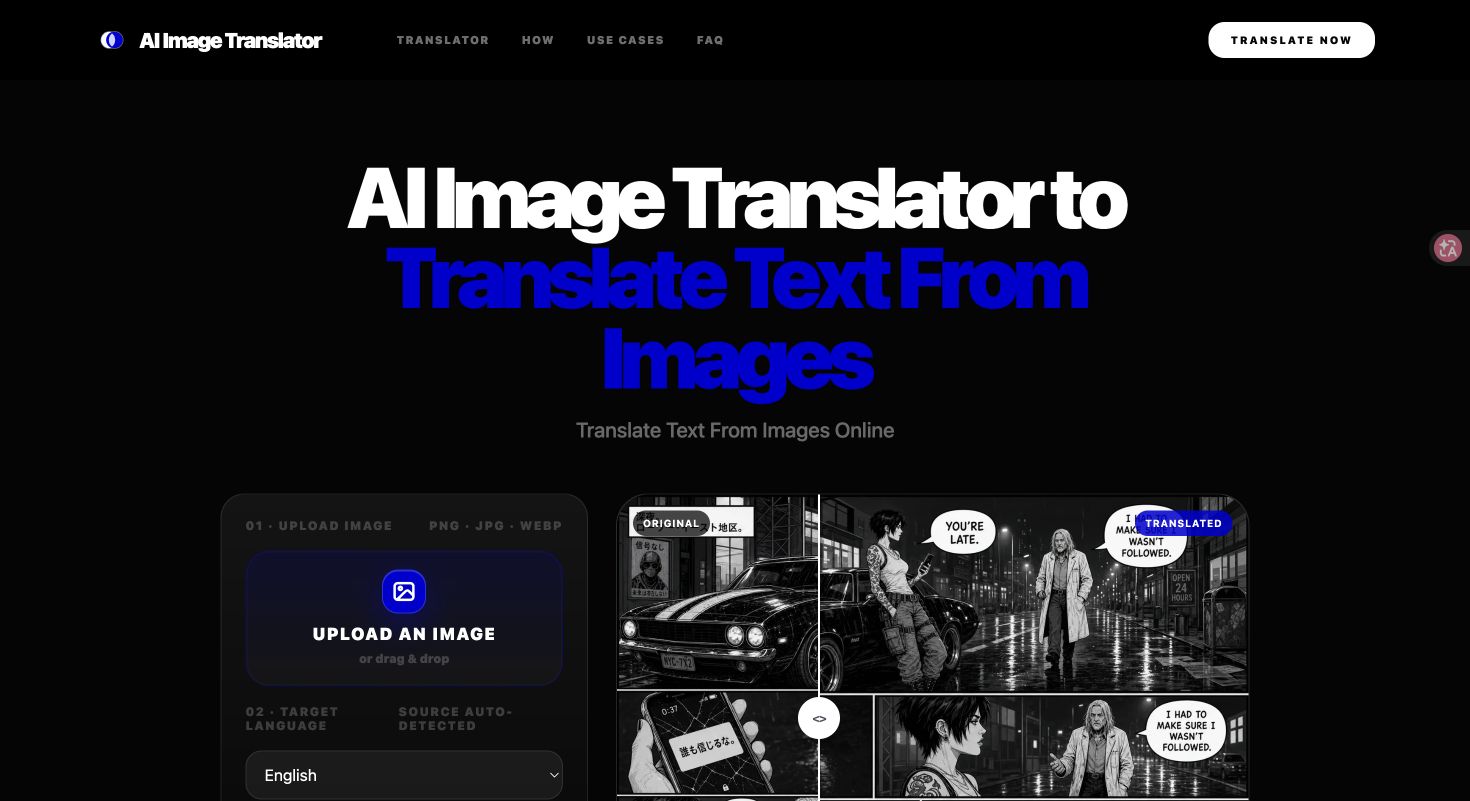
The first version kept one complete path: upload an image → recognize its text → choose a target language → view the original and translated text. I added preview, loading, success, and error states so that path would not collapse, then put Cloudflare Turnstile at the API door.
- Single-image upload and preview
- OCR and source-language detection
- Eight target languages
- Original and translated text
- Accounts and translation history
- Batch processing and payments
- Redrawing translations into images
- “While we are here, ten more AI tools”
The scope was small because the goal was to complete a useful product loop. A side project rarely dies from a shortage of ideas. More often, version one is asked to carry the year-three roadmap.
03. Stop serving tea. Put the tool on the table
For a task-based product, the interface is often the best product introduction. Instead of three screens of value propositions, the homepage opens with the upload control, language selector, and result area.
The layout uses two columns: actions on the left, preview and results on the right. A visitor can guess what to do without studying the copy. An understandable upload box is more honest than “redefining cross-language visual communication.”
04. A lighter stack leaves more room in your head
The frontend is a hand-written index.html, with no React, Vue, Next.js, or large component system. Frameworks were not the problem; component reuse was simply not where this product could fail.
- The browser handles upload, preview, language selection, and results.
- A Cloudflare Pages Function keeps the API key on the server.
- Turnstile verifies requests before they reach the model, reducing abuse.
- A vision model performs OCR, language detection, and translation, then returns structured JSON.
The architecture is not glamorous, but its boundaries are clear: secrets stay secret, the endpoint has protection, and deployment is short. For a small tool testing search intent, that is more useful than a twelve-layer architecture diagram.
05. SEO is not garnish sprinkled on before launch
Because the project began with search intent, SEO was never a last-minute assignment. The title, H1, How It Works, use cases, FAQ, and SoftwareApplication, FAQPage, and HowTo structured data all grew with the page itself.
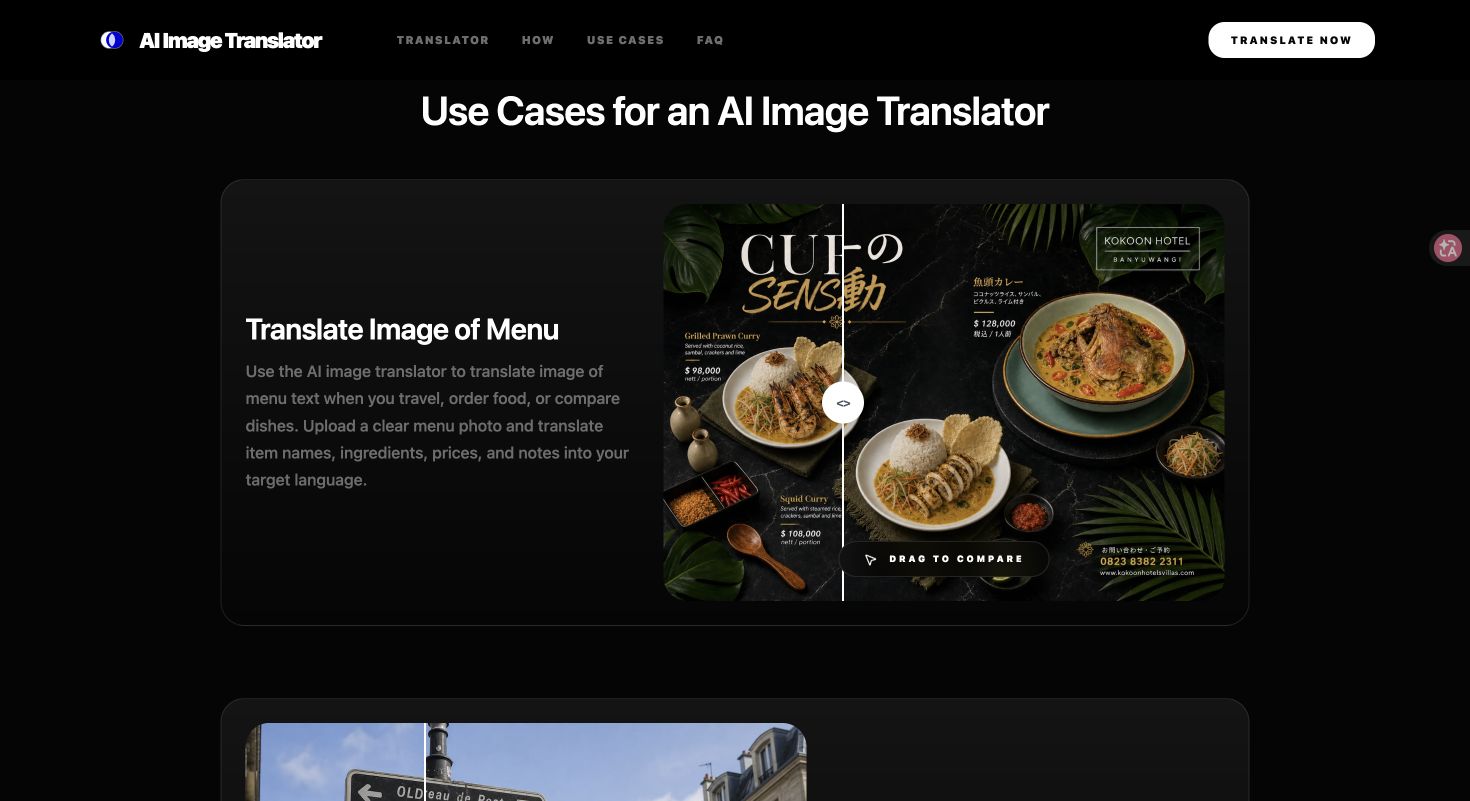
I did not write an essay just to make the page longer. I answered the questions a user might actually have: Can it translate screenshots? What about menus? Which images work best? Does it preserve the layout? Should I upload sensitive images?
Good SEO content should read like helpful product guidance, not a keyword team-building exercise.
06. I left with more than a URL
This project left me with three practical lessons:
- A keyword can be a product constraint. Whenever a new feature appeared, I asked whether it improved image translation.
- When the task is clear, the tool beats the slogan. Users already know why they came. Do not make them tour the showroom first.
- Finishing is a product skill. Shipping, documenting risks, and writing a closeout note are more valuable than permanently admiring the possibilities.
In the end, I gained a reusable single-page tool structure, a protected AI request path, a method for organizing content around one keyword, and a closeout record that will not return at midnight asking whether the project is still alive.
Want to see what it looks like now? Visit ai-image-translator.com ↗. If it ever grows into a large product, I will remember that it started by helping someone understand a menu.