Featured Case · 01
Water Production Measurement & Soft Sensor
The Challenge
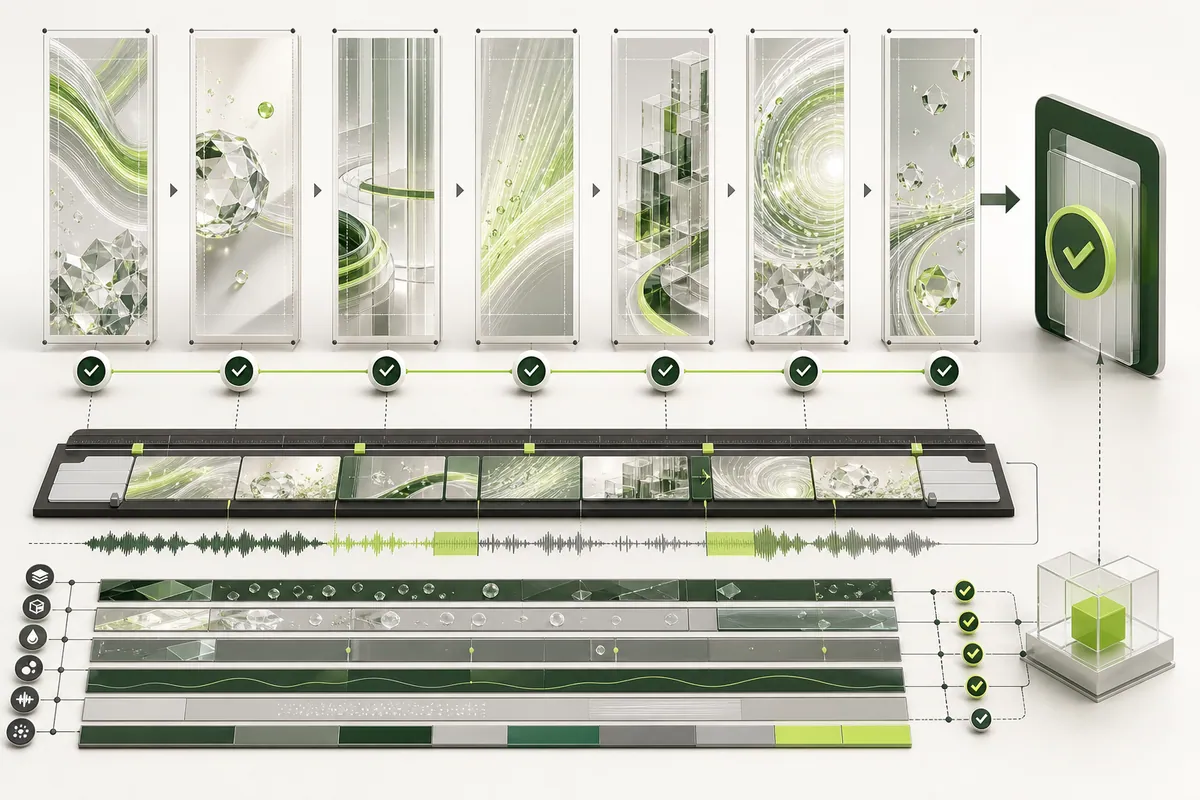
Observed discharge did not always represent real-time water production. Storage changes, pump operation, sensor timing, and operating transitions all shaped the measurement, so establishing a reliable production label was part of the modeling problem rather than a preprocessing detail.
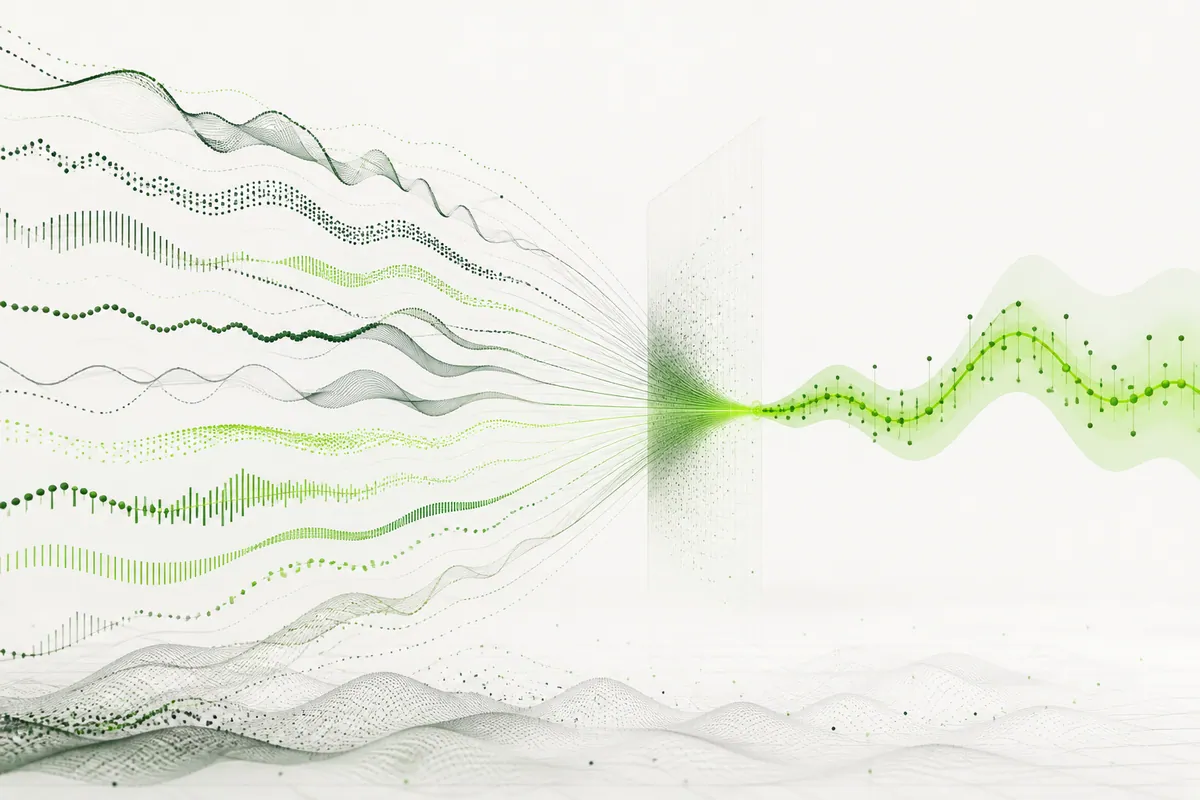
A soft sensor estimates a process value that is difficult to measure continuously from other available operating signals.
My Role
- Mapped the evaporation, condensation, storage, and discharge process into a business-readable measurement model.
- Reconstructed minute-level production labels from anonymized discharge and storage changes, then checked their aggregate agreement against independent metering.
- Investigated timing alignment, quantized storage changes, missing values, and operating-state transitions.
- Built historical and operating-condition features from upstream process signals only.
- Prevented target leakage by excluding label sources and downstream outcomes from model inputs.
- Used time-ordered validation and a later operating regime to test generalization beyond the training window.
Method Flow
- 01Reconstruct the measurement chain
- 02Build a reliable minute-level label
- 03Model upstream process history
- 04Validate forward across operating regimes
- Measurement reliability before model complexity.
- Multi-million-row source dataset with more than 200,000 stable operating minutes.
- Time-ordered evaluation instead of random train/test splitting.
- Explicit leakage control and operating-regime boundaries.
Offline Validation
Measured forward, qualified carefully
0.0409 t/mininternal time-ordered validation MAE
12.48%internal time-ordered validation WMAPE
0.0375 t/minlater operating-regime validation MAE
9.30%later operating-regime validation WMAPE
Offline validation results; the model had not yet entered production deployment.
Measurement assumptions still require field confirmation, and steady-state rules must be refit on training-only data before a final benchmark is frozen. The work remains an offline decision-support study.